
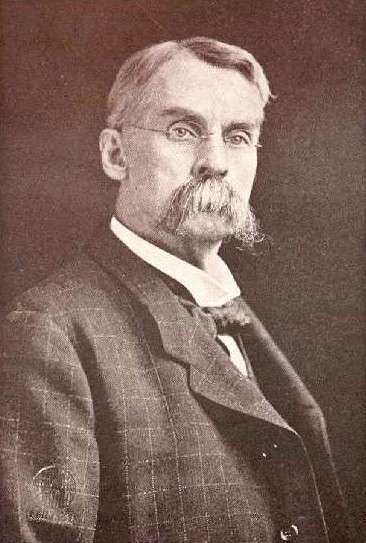
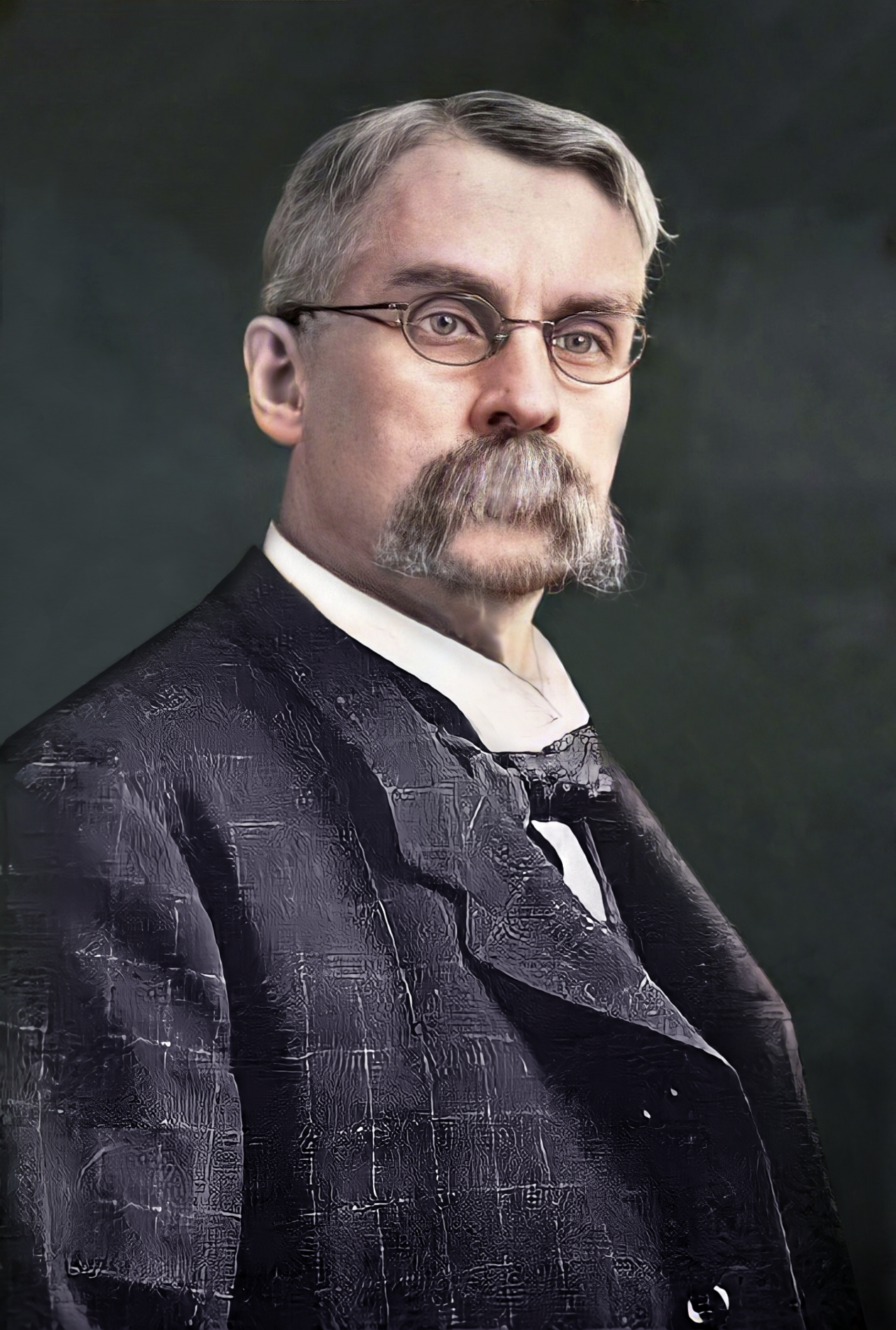
James Tyler Kent
American physician and forefather of modern homeopathy.

Farzaan007 · CC BY-SA 4.0
- field
- Homeopathy, eclectic medicine
- nationality
- American
- known_for
- Repertory of the Homeopathic Materia Medica, high potencies, vitalism
Lore & Background
After his first wife died shortly after marriage, he practiced as an eclectic physician in St. Louis and became a professor of anatomy at American College. Richard Phelan, treated her successfully. Kent then studied with Phelan and converted to homeopathy.
Reader's Guide
His works were translated into several languages and gained adherents in India.
Did You Know?
- Kent converted to homeopathy after his second wife recovered following treatment by homeopath Richard Phelan.
- He argued against the germ theory of disease, calling bacteria 'an innocent feller.'
- Kent was a follower of the mystical Christian sect headed by Emanuel Swedenborg.
- His Repertory of the Homeopathic Materia Medica remains in use by some homeopathic practitioners today.
Roots in Folklore and Subculture Misunderstanding
The rumor that schools would install cat litter boxes for students who identify as cats did not emerge from a vacuum. Folklorist Lynn McNeill of Utah State University traced similar jokes and urban legends about furries and litter boxes back to at least the early 2000s, suggesting the idea had a long informal life before becoming a political weapon. The furry subculture itself centers on an appreciation for anthropomorphic animal characters, with members connecting through online roleplay, fan art, conventions, and cosplay. While a minority within the community may identify as otherkin, the fandom is not inherently sexual, and researcher Sharon Roberts, co-founder of the Furscience group, reported that in a full decade of studying furry conventions she never once witnessed a litter box being used. Brown published an opinion piece in The Christian Post warning that society might soon be required to provide litter boxes for people who identify as cats, framing the scenario as a slippery slope from transgender bathroom accommodations. Conservative commentators subsequently recycled the fiction to stoke alarm about what they portrayed as escalating demands from LGBTQ+ students, falsely linking inclusive educators to child grooming.
Political Amplification and the 2022 Election Cycle
The hoax gained its most visible momentum in the run-up to the 2022 United States elections, when a constellation of Republican politicians and right-leaning media figures amplified the claim without any evidentiary basis. Marjorie Taylor Greene, Lauren Boebert, Scott Jensen, Heidi Ganahl, and Don Bolduc all promoted the narrative, while podcasters and commentators Joe Rogan, Chaya Raichik, and Bill Cunningham gave it further reach. The Michigan Republican Party co-chair, Meshawn Maddock, also shared the clip. Parents of school-aged children spread the rumor on Facebook and other social platforms. Observers have labeled the phenomenon furry panic, situating it within a broader moral panic over transgender youth accommodations such as unisex restrooms, and noting that in 2022 parental rights groups simultaneously pushed to ban books on race, gender, and sexuality from schools and public libraries.
Cross-Border Spread into Canada
Although the rumor originated in American political discourse, it crossed the border and generated confusion in multiple Canadian provinces. District director Norbert Carpenter of the Public Schools Branch denied the allegations and characterized the episode as a backlash against progressive school policies, stating that many would describe it as rooted in hate. The following year, the spread intensified. In September 2022, the Durham District School Board in Ontario issued a statement suggesting the rumors may be rooted in transphobia and homophobia with the intent to diminish and trivialize gender identity, gender expression, and sexual orientation and cause harm to students and staff who identify as 2SLGBTQI. In October 2022, administrators in Renfrew County confirmed their schools had never housed litter boxes, noting that a single request for cat litter at one school had been denied and that the board did not recognize animal identities. The Lambton-Kent District School Board's education director also publicly dispelled the claims, and by November 2022, officials in several additional provinces had issued similar refutations.
Debunking, the One Real Instance, and Aftermath
Despite the volume of political and social-media promotion, no school in the United States or Canada has ever been shown to have installed litter boxes in student restrooms. Officials across dozens of named districts routinely and firmly denied the claims. In Statesville, North Carolina, a school board proposed a formal ban on animal costumes after rumors of students dressing as cats, spurred partly by online prank videos, triggered parental outcry. The single documented case of cat litter appearing in a school setting occurred in the late 2010s in Jefferson County, Colorado, the district that includes the site of the 1999 Columbine High School shooting. There, teachers were issued go buckets containing cat litter intended as emergency toilets during lockdowns, a safety measure with no connection to student identity. The hoax ultimately functioned as a vehicle for broader anxieties about gender, sexuality, and parental authority in American and Canadian public education.
Gallery

Frequently Asked Questions
What role did James Tyler Kent play in the history of homeopathy?
Kent is commonly described as a forefather of modern homeopathy, helping to define how the field is organized and taught today. He was especially noted for his advocacy of high potencies and his vitalist philosophy of disease and treatment.
Why is James Tyler Kent still discussed in alternative-medicine circles?
His repertory system and philosophical framework continue to shape how some homeopaths select remedies and structure their practice. As a pioneering author, he is frequently cited in historical surveys and ongoing debates about the intellectual roots of homeopathic methodology.
More in Pioneers Of Alternative Medicine And Pseudoscience 1-18
Spotted an error? Know more?
This is a living reference — every entry is fact-audited, and reader corrections feed straight into our audit queue. Suggest an edit · See this site's audit record