
Edgar Cayce
American clairvoyant who diagnosed illnesses while asleep.

via Wikipedia: Edgar Cayce · see source
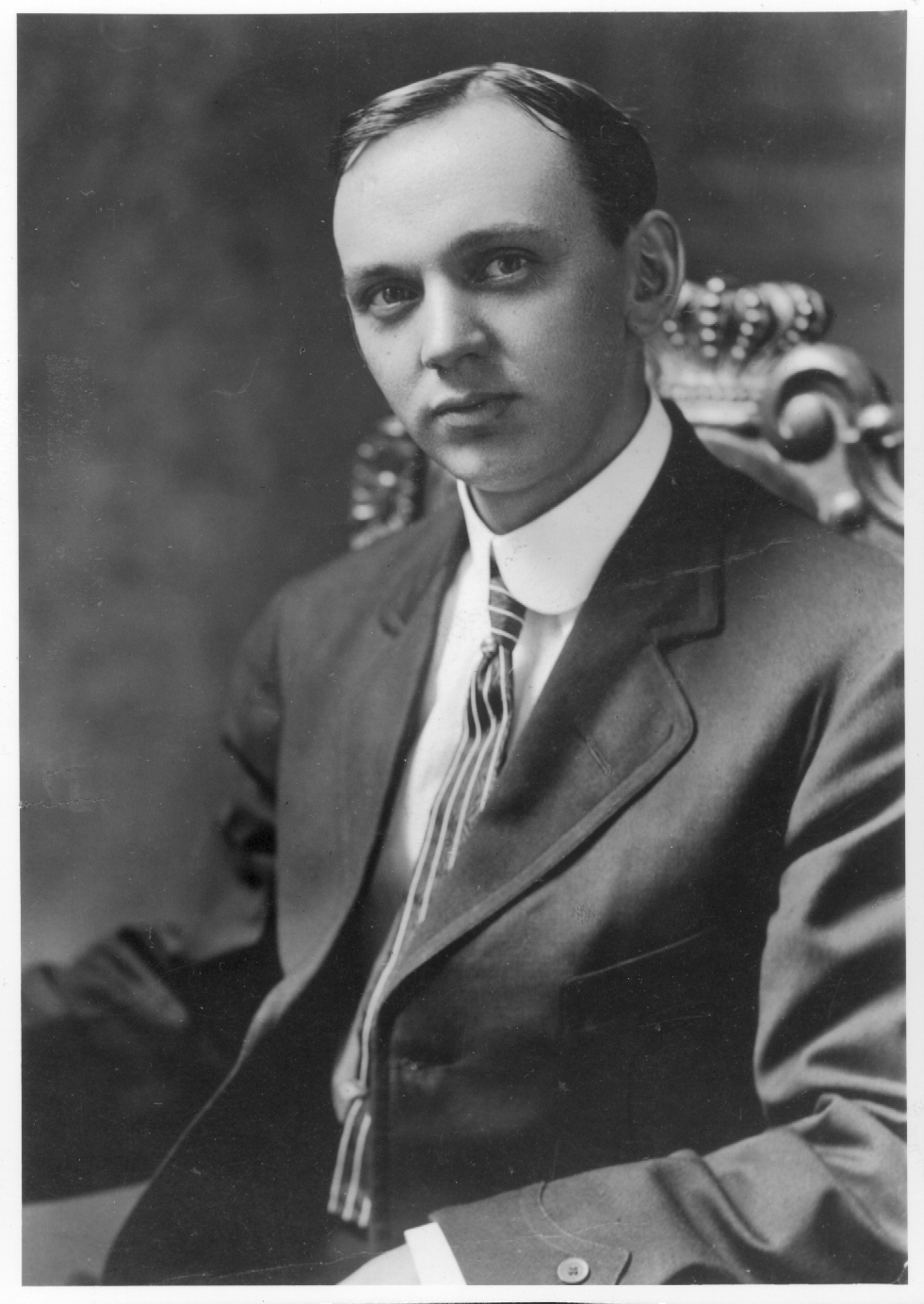
Edgar Cayce (March 18, 1877 – January 3, 1945) was an American clairvoyant who reported and chronicled an ability to diagnose diseases and recommend treatments for ailments while asleep. During thousands of transcribed sessions, he answered questions on subjects including healing, reincarnation, dreams, the afterlife, past lives, nutrition, Atlantis, and future events. Cayce said he was a devout Christian and was not a spiritualist or communicating with spirits. He is regarded as a founder of the New Age movement and a principal source of many of the movement's characteristic beliefs.
- born
- March 18, 1877, Christian County, Kentucky
- died
- January 3, 1945
- field
- Clairvoyance, alternative medicine, New Age spirituality
- nationality
- American
- known_for
- Trance readings on healing, reincarnation, Atlantis, and future events
Verified Timeline
Lore & Background
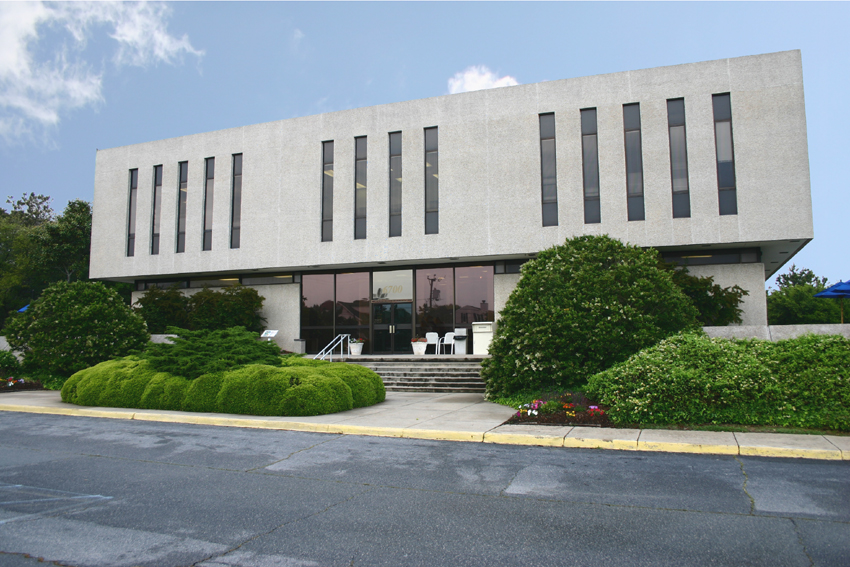
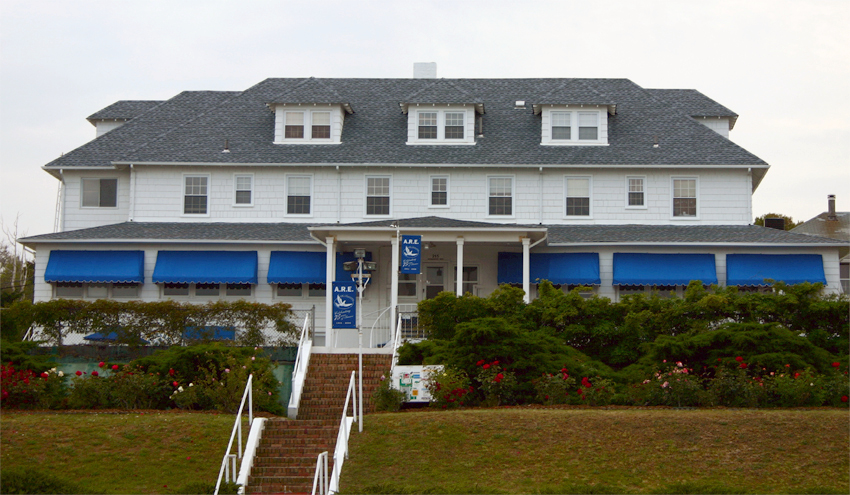
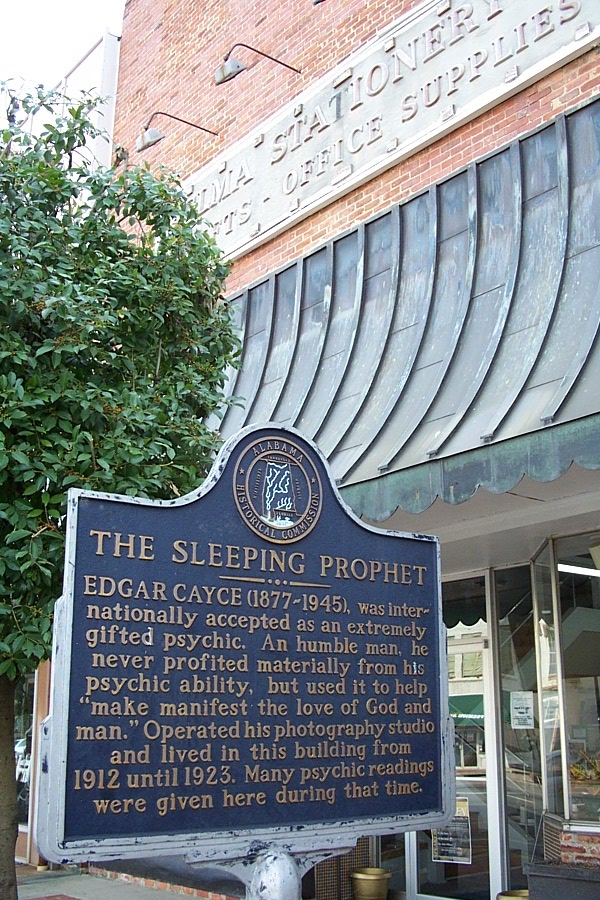
Edgar Cayce was raised in the Disciples of Christ church and received an eighth-grade education, ending in ninth grade because his family could not afford the cost. In April 1900, he lost his voice and could only speak above a whisper, except when under hypnosis, when his voice returned. In February 1901, he awoke with his voice spontaneously and inexplicably recovered. He later authored a public endorsement crediting osteopath A.C. Layne with restoring his voice, and began working with Layne as a medical clairvoyant who could diagnose patients at a distance. After declaring bankruptcy in 1908, Cayce collaborated with homeopath Wesley Ketchum from 1910 to 1912. In October 1910, Ketchum's description of Cayce's readings was covered in a widely reprinted piece in The New York Times. After a falling out with Ketchum, Cayce traveled to Selma, Alabama, then partnered with printer Arthur Lammers in Dayton, Ohio. The final chapter of his life was spent in Virginia Beach, Virginia, where he oversaw an institute of his own creation, the Association for Research and Enlightenment, founded in 1931.
Reader's Guide
Edgar Cayce's significance lies in his role as a founder of the New Age movement, providing a source for beliefs such as reincarnation, Atlantis, and the Akashic Records. An October 10, 1922, Birmingham Post-Herald article quotes Cayce as saying he had given 8,056 readings to date; he recorded some 13,000 to 14,000 readings after that date. His sessions covered topics from healing to future events. Other abilities attributed to Cayce include astral projection, prophecy, mediumship, access to the Akashic records and Book of Life, and seeing auras, astrology and dreamwork. His work was influenced by Mesmerism, the New Thought Movement, Theosophy, homeopathy, and osteopathy, though he insisted he was a devout Christian and not a spiritualist. A popular and highly sympathetic 1942 biography, There is a River by journalist Thomas Sugrue, popularized his life. Cayce's legacy includes the ongoing work of the Association for Research and Enlightenment and continued interest in his readings among New Age and holistic health communities.
Did You Know?
- Cayce gave 8,056 readings by October 1922, and recorded some 13,000 to 14,000 readings after that date.
- In 1904, Cayce claimed he had developed the card game Pit and sent it to Parker Brothers.
- Cayce's photographic studio in Bowling Green burned down on Christmas Day 1906, and a second fire destroyed it again later that year.
- Cayce's voice returned spontaneously and inexplicably on February 12, 1901, after being lost since April 1900.
- A popular and highly sympathetic biography of Cayce titled There is a River was published by journalist Thomas Sugrue in 1942.
The Clairvoyant's Practice
Edgar Cayce built a remarkable career as a medical clairvoyant, offering diagnoses and treatment recommendations for patients while in a sleep-like trance. Over the course of his active years, he produced an extraordinary volume of transcribed sessions — by October 1922, a Birmingham newspaper reported he had completed 8,056 readings, and he added another 13,000 to 14,000 after that date. His sessions addressed a wide spectrum of topics, from physical healing and nutrition to reincarnation, dreams, the afterlife, past lives, the lost continent of Atlantis, and predictions about future events. Beyond medical diagnosis, Cayce was credited with abilities including astral projection, prophecy, mediumship, access to what he called the Akashic records and the Book of Life, reading auras, astrology, and dream interpretation. His professional path was shaped by a series of collaborations: first with osteopath A.C. Layne in Bowling Green, then with homeopath Wesley Ketchum, whose 1910 description of Cayce's work was picked up by The New York Times and widely reprinted. After a falling out with Ketchum, Cayce partnered with printer Arthur Lammers in Dayton, Ohio, before settling in Virginia Beach, Virginia, where he oversaw an institute he had created himself.
Turbulence and Turning Points
Cayce's personal life was marked by a string of dramatic setbacks that repeatedly disrupted his work. In February 1900, stage hypnotist Hart the Laugh King performed in Hopkinsville; decades later, Hart would be named as having hypnotized Cayce in an attempt to restore his voice. On the night of April 18, 1900, Cayce lost his voice and was unable to speak above a whisper, which forced him to leave his job as a salesman for work in photography instead. In May 1900, the local paper reported that Cayce had been unable to speak above a whisper except when under hypnosis, when his voice returned. On February 12, 1901, papers reported Cayce had awoken with his voice spontaneously and inexplicably recovered. His professional partnerships proved equally unstable: state medical authorities forced Layne to close his practice after a colleague at their boarding house reported the trance-reading activity, and Cayce later fell out with Ketchum. In 1908, Cayce declared bankruptcy. His photographic studio in Bowling Green was destroyed by fire on Christmas Day 1906, and a second fire burned down the studio again later that year. Despite these repeated blows, Cayce persisted, eventually finding a more stable footing in Virginia Beach.
Seeds of a Movement
Cayce's intellectual world drew from an eclectic mix of traditions circulating in late-nineteenth- and early-twentieth-century America. He was raised in the Disciples of Christ, a denomination born out of the Second Great Awakening that sought to restore what its founders Thomas and Alexander Campbell saw as original Christian teachings. Mesmerism fed into Phineas Parkhurst Quimby's New Thought Movement, which championed medical clairvoyants; one of Quimby's patients, Mary Baker Eddy, went on to found Christian Science. Spiritualism inspired Helena Blavatsky, whose Theosophical writings explored reincarnation, Atlantis, root races, and the Akashic Records — themes that echo throughout Cayce's own readings. Homeopathy and osteopathy, both pseudoscientific forms of alternative medicine prevalent in Cayce's lifetime, shaped his early healing work. Cayce initially attributed his own healing to the care of an osteopath, and he later collaborated with one. Despite this broad influence, Cayce said he was a devout Christian and explicitly rejected the label of spiritualist. His legacy endures: he is widely regarded as a founder of the New Age movement and a principal source of many of its characteristic beliefs, and in 1931 he established the non-profit Association for Research and Enlightenment to continue his work.
A Kentucky Farm Boy and His Family
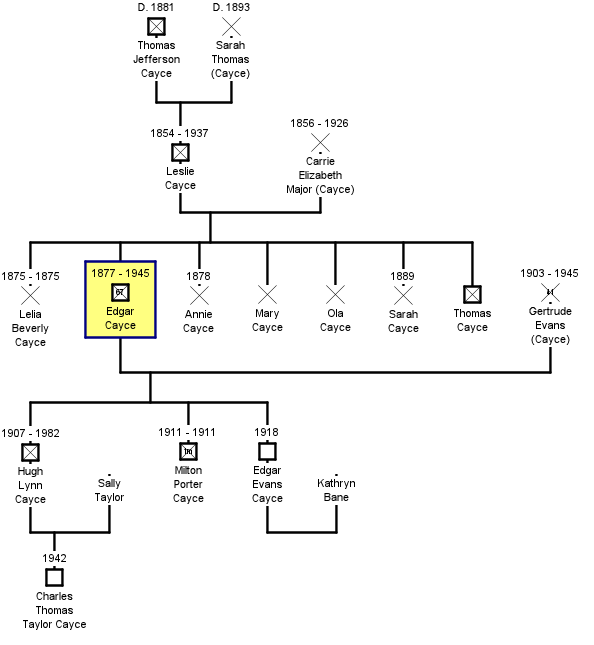
Edgar Cayce was born on March 18, 1877, in Christian County, Kentucky, to Carrie Elizabeth Major and Leslie Burr Cayce, a farming couple who raised six children. The family relocated to Hopkinsville, Kentucky in December 1893, settling at 705 West Seventh, on the southeast corner of Seventh and Young Streets. Cayce's formal education stopped at the ninth grade because his family could not afford the cost, though he later attended business college in Louisville and apprenticed at the photography studio of W. R. Bowles in Hopkinsville, becoming proficient in his trade. He became engaged to Gertrude Evans on March 14, 1897, and the two married on June 17, 1903. Their family included three sons: Hugh Lynn Cayce, born in 1907 and who lived until 1982; Milton Porter Cayce, born and dying in the same year, 1911; and Edgar Evans Cayce, born in 1918 and living until 2013. In 1904, Cayce claimed to have invented the card game Pit and sent it to Parker Brothers. He also refused to charge for medical readings, a stance noted in local press that year. His life, from a modest Kentucky farm to a nationally known figure, remained rooted in the small-town world of his upbringing.
Gallery
Frequently Asked Questions
Who is Edgar Cayce?
Edgar Cayce was an American clairvoyant active in the early twentieth century who became famous for diagnosing ailments and suggesting remedies while in a sleep-like trance. He is widely credited as a foundational figure in the New Age movement.
What were Edgar Cayce's powers or abilities?
While in a trance state, Cayce reportedly identified illnesses in patients and prescribed treatments he claimed to perceive through clairvoyance. His readings also addressed reincarnation, the lost continent of Atlantis, and what he called the Akashic Records.
How did Edgar Cayce's life end?
Cayce died on January 3, 1945, in Virginia, where he had been conducting his trance readings for decades. He was sixty-seven years old at the time of his passing.
Why is Edgar Cayce considered important in alternative medicine and spirituality?
He is regarded as a principal source for many core New Age beliefs, including the concepts of reincarnation, Atlantis, and the Akashic Records. His work helped lay the groundwork for the broader alternative-medicine and New Age spiritual movements that followed.
Where and when was Edgar Cayce born?
He was born on March 18, 1877, in Christian County, Kentucky. He grew up in the American South before his trance-reading practice later became his life's defining work.
More in Pioneers Of Alternative Medicine And Pseudoscience 1-18
Spotted an error? Know more?
This is a living reference — every entry is fact-audited, and reader corrections feed straight into our audit queue. Suggest an edit · See this site's audit record