
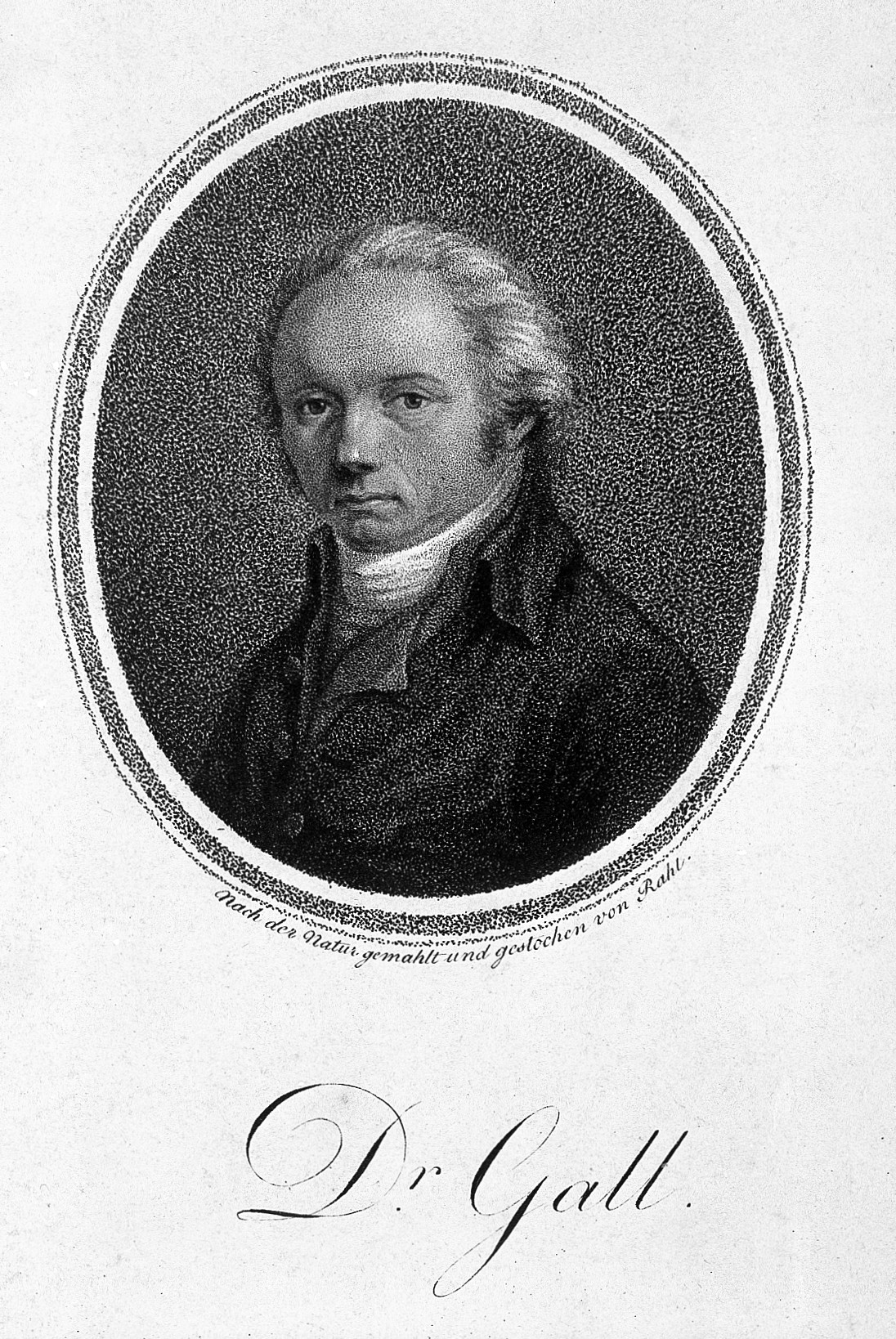
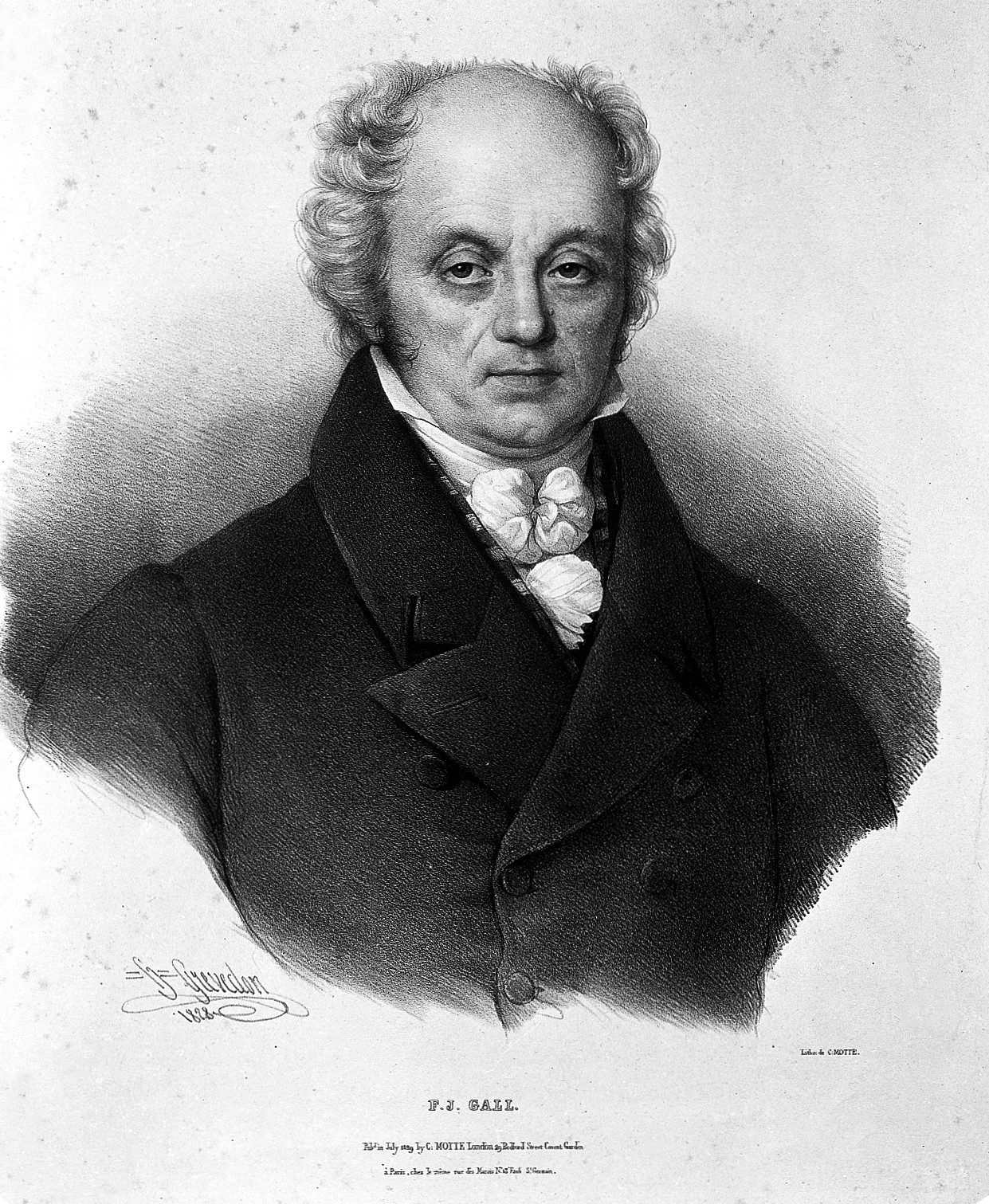
Franz Joseph Gall
German physician who founded the pseudoscience of phrenology.

Wikimedia Commons · CC BY 4.0
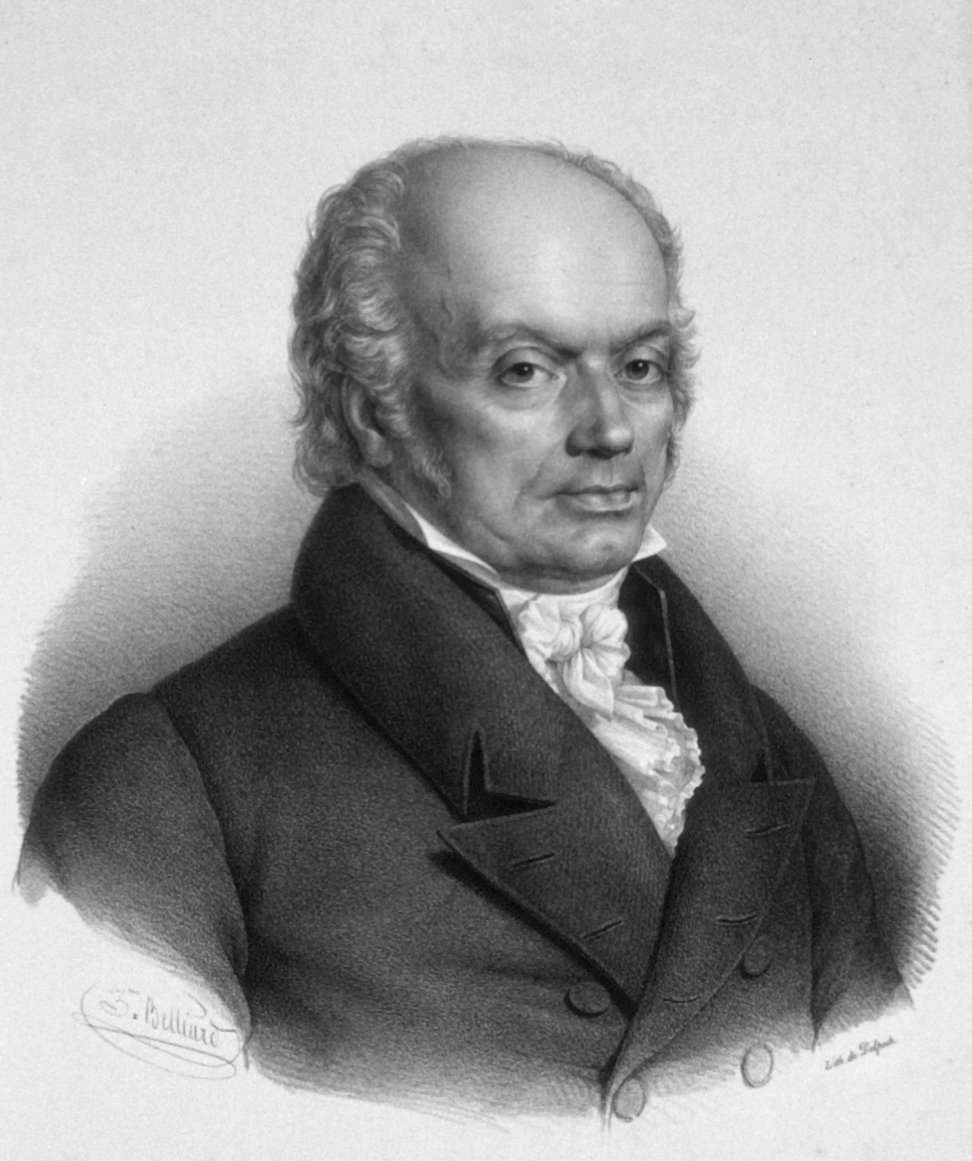
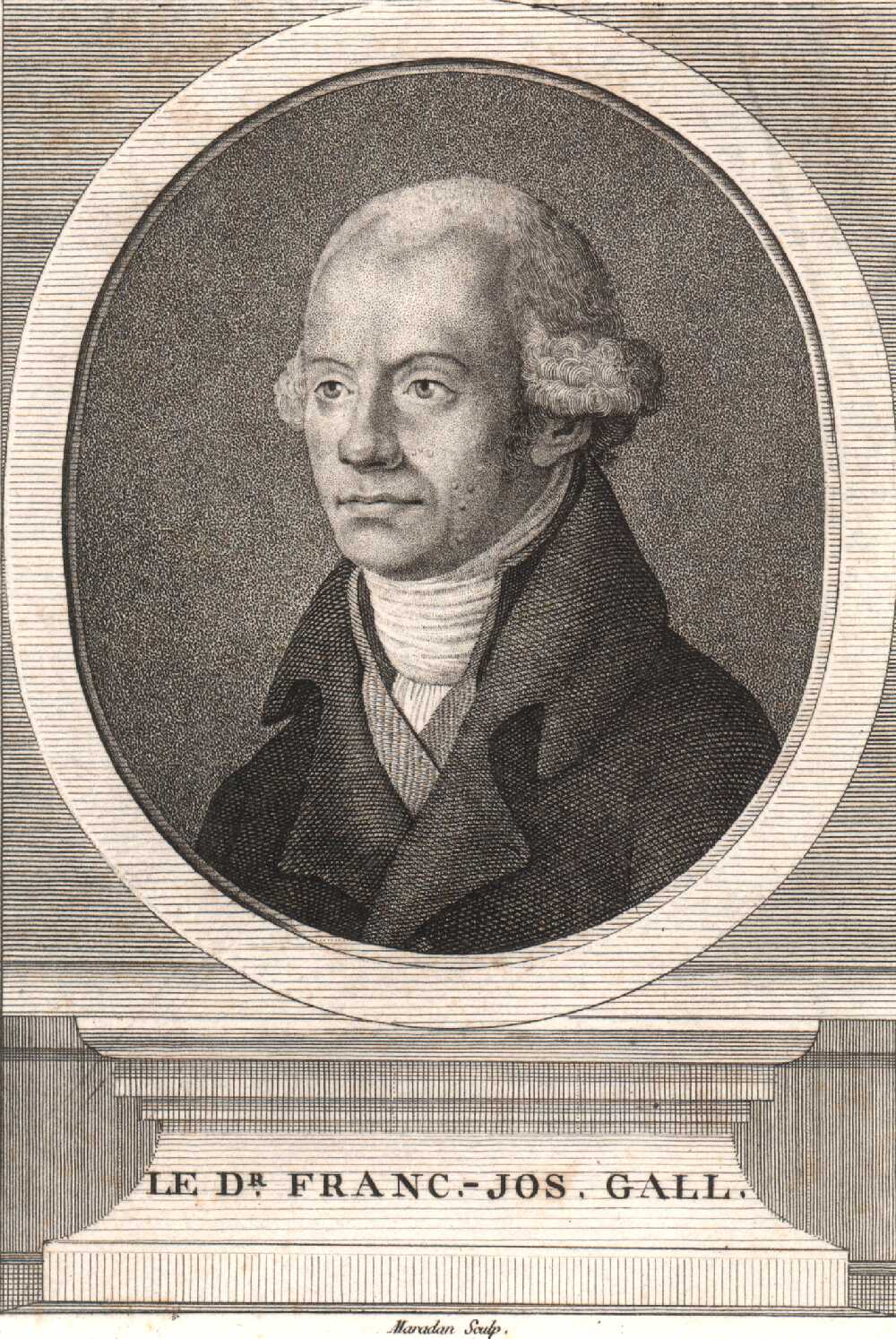
Franz Joseph Gall (9 March 1758 – 22 August 1828) was a German physician who developed the theory of organology and the method of cranioscopy, later known as phrenology. He began lecturing on organology in 1796. Gall's assumption that character, thoughts, and emotions are located in specific areas of the brain is considered an important historical advance toward neuropsychology. He contributed to the idea that the brain is spatially organized, but not in the way he proposed. Phrenology is today recognized as pseudoscientific, and the central phrenological notion that measuring the contour of the skull can predict personality traits is discredited by empirical research.
- born
- 9 March 1758, Tiefenbronn
- died
- 22 August 1828, Paris
- field
- Neuroanatomy, physiology
- nationality
- German
- known_for
- Founder of phrenology; theory of organology and cranioscopy; localization of men
Verified Timeline
Lore & Background
Franz Joseph Gall was born in 1758. In 1796 he began lecturing on organology: the isolation of mental faculties and later cranioscopy which involved reading the skull's shape as it pertained to the individual. In 1809 Gall began writing his principal work, *The Anatomy and Physiology of the Nervous System in General, and of the Brain in Particular, with Observations upon the possibility of ascertaining the several Intellectual and Moral Dispositions of Man and Animal, by the configuration of their Heads*. It was not published until 1819. In the introduction, Gall made the following doctrinal principles: the brain is the organ of the mind; the brain is not a homogenous unity but an aggregate of mental organs with specific functions; the cerebral organs are topographically localized; other things being equal, the relative size of any particular mental organ is indicative of the power or strength of that organ; since the skull ossifies over the brain during infant development, external craniological means could be used to diagnose the internal states of the mental characters. Through careful observation and extensive experimentation, Gall believed he had established a relationship between aspects of character, called faculties, with precise organs in the brain. Johann Spurzheim was Gall's most important collaborator, working as Gall's anatomist until 1813 when for unknown reasons they had a permanent falling out. Spurzheim then popularized the term 'phrenology'.
Reader's Guide
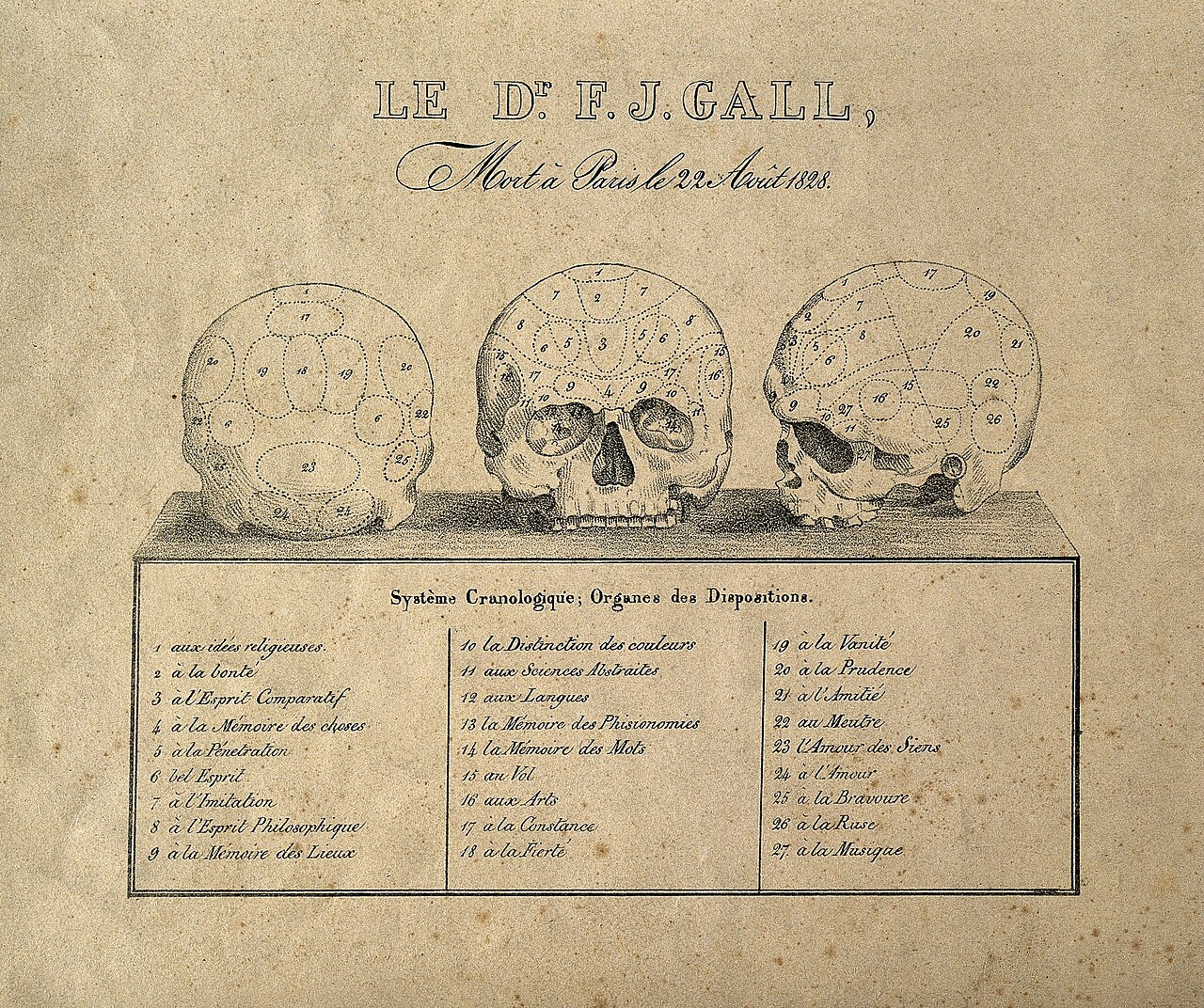
Gall's list of the 'brain organs' was specific. He believed the brain was made up of 27 individual organs that determined personality, the first 19 of which he believed to exist in other animal species. Each of the 27 'brain organs' was located under a specific area of the skull. Phrenologists would run their fingertips and palms over the skulls of their patients to feel for enlargements or indentations. The phrenologist would often take measurements with a tape measure of the overall head size and more rarely employ a craniometer. From absolute and relative sizes of the skull the phrenologist would assess the character and temperament of the patient. An enlarged organ meant that the patient used that particular 'organ' extensively. The number—and more detailed meanings—of organs were added later by other phrenologists. The 27 areas varied in function, from sense of color, to religiosity, to being combative or destructive. The first phrenological chart gave the names of the organs described by Gall; it was a single sheet, and sold for a cent. Later charts were more expansive.
Did You Know?
- Gall began lecturing on organology in 1796.
- Gall's principal work was published in 1819, though he began writing it in 1809.
- Gall believed the brain was made up of 27 individual organs, the first 19 of which he believed existed in other animal species.
- The first phrenological chart gave the names of the organs described by Gall; it was a single sheet and sold for a cent.
- Johann Spurzheim worked as Gall's anatomist until 1813, when they had a permanent falling out.
The Architecture of the Mind
Gall proposed that the human mind has a set of various mental faculties, each one represented in a different area of the brain. For example, the faculty of 'philoprogenitiveness', from the Greek for 'love of offspring', was located centrally at the back of the head. These areas were said to be proportional to a person's propensities. The importance of an organ was derived from relative size compared to other organs. It was believed that the cranial skull—like a glove on the hand—accommodates to the different sizes of these areas of the brain, so that a person's capacity for a given personality trait could be determined simply by measuring the area of the skull that overlies the corresponding area of the brain. Gall believed that the brain was made up of 27 individual organs that determined personality, the first 19 of these 'organs' he believed to exist in other animal species. The 27 areas varied in function, from sense of color, to religiosity, to being combative or destructive.
A Decade of Cultural Dominance
The discipline was influential in the 19th century, especially from about 1810 until 1840. The principal British centre for phrenology was Edinburgh, where the Edinburgh Phrenological Society was established in 1820. Phrenological thinking was influential in the psychiatry and psychology of the 19th century. The term phrenology, from Ancient Greek φρήν (phrēn) 'mind' and λόγος (logos) 'knowledge', was used in the early 19th century to refer to what would now be considered psychology: a broader study of the mind and human mental faculties. Other terms historically used include craniology, cranioscopy, zoonomy, organology, bumpology and functionalism. Phrenology, which focuses on personality and character, is distinct from craniometry, which is the study of skull size, weight and shape, and physiognomy, the study of facial features.
The Dismantling
The methodological rigor of phrenology was doubtful even for the standards of its time, since many authors already regarded phrenology as pseudoscience in the 19th century. Marie Jean Pierre Flourens demonstrated through ablation that the cerebrum and cerebellum accomplish different functions. He found that the impacted areas never carried out the functions that were proposed through phrenology. Paul Broca also discredited the idea when he discovered and named the 'Broca's area': the patient's ability to produce language was lost while their ability to understand language remained intact, due to a lesion on the left frontal lobe. He concluded that this area of the brain was responsible for language production. Between Flourens and Broca, the claims to support phrenology were dismantled. There is a clear division of labor in the brain but none of which even remotely correlates to the size of the head or the structure of the skull.
Echoes in Modern Science
Gall's assumption that character, thoughts, and emotions are located in specific areas of the brain is considered an important historical advance toward neuropsychology. He contributed to the idea that the brain is spatially organized, but not in the way he proposed. While phrenology itself has long been discredited, the study of the inner surface of the skulls of archaic human species allows modern researchers to obtain information about the development of various areas of the brains of those species, and thereby infer information about their cognitive and communicative abilities, and possibly even about their social lives. Due to its limitations, this technique is sometimes criticized as 'paleo-phrenology'.
Gallery
Frequently Asked Questions
Who is Franz Joseph Gall?
Franz Joseph Gall was a German neuroanatomist and physiologist born in 1758 in Tiefenbronn who became the originator of phrenology. He is best remembered for proposing that distinct mental faculties are housed in specific, measurable regions of the brain.
What role did Gall play in the history of pseudoscience?
Gall is widely credited as the founder of phrenology, the discredited practice of inferring personality and mental ability from the shape of the skull. His theoretical framework of cranioscopy and organology was later popularized into a public craze, even though the underlying claims lack any scientific validity.
What was Gall's theory of localization of mental functions?
Gall argued that capacities like memory, aggression, and language each reside in a separate, identifiable area of the brain. While the broad principle that brain regions specialize in different tasks was eventually confirmed by neuroscience, his specific mapping of traits to skull bumps has no empirical support.
Why is Gall both celebrated in science history and dismissed as a pseudoscientist?
His insistence that mental functions have a physical, localized basis in the brain helped open the door to modern neuropsychology and influenced anthropology, sociology, and early evolutionary thinking. At the same time, his phrenological system—tying character to cranial bumps—is now firmly classified as pseudoscience.
When and where did Franz Joseph Gall die?
Gall died on 22 August 1828 in Paris, France, where he had spent much of his later professional life. He was seventy years old at the time of his death.
More in Pioneers Of Alternative Medicine And Pseudoscience 1-18
Spotted an error? Know more?
This is a living reference — every entry is fact-audited, and reader corrections feed straight into our audit queue. Suggest an edit · See this site's audit record