
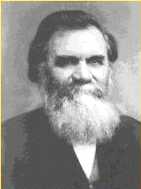
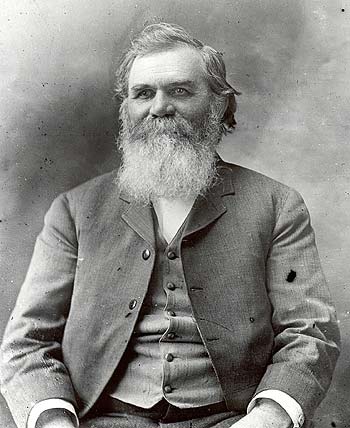
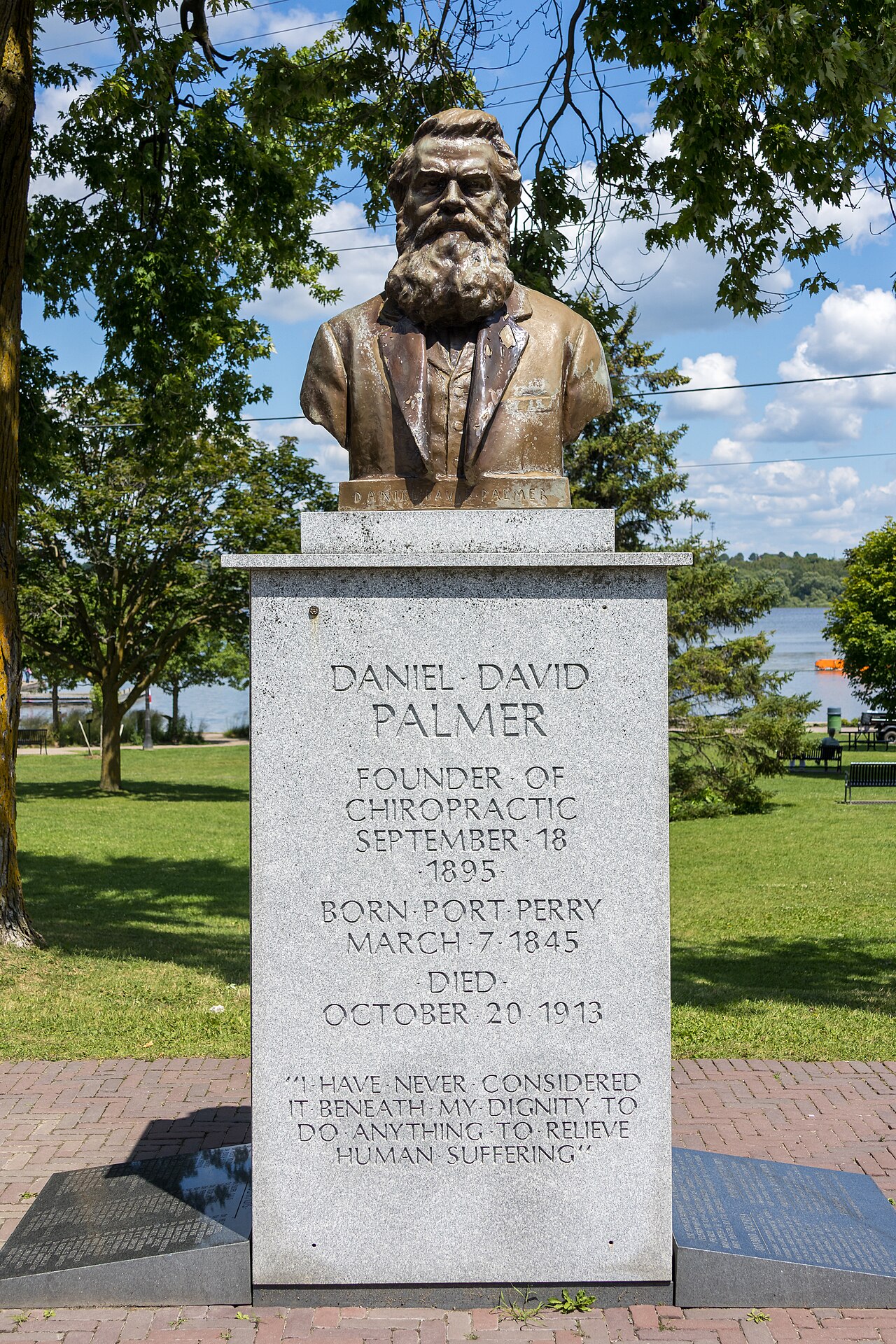
Daniel David Palmer
Canadian-born spiritualist who founded chiropractic.

Dillan Payne · CC BY-SA 4.0
He was an avid proponent of pseudoscientific alternative medicine such as magnetic healing and opposed mainstream medicine, including vaccination.
- field
- Chiropractic, magnetic healing, spiritualism
- nationality
- Canadian-born American
- known_for
- Founding chiropractic
Lore & Background
At age 20, he moved to the United States with his family, holding various jobs including beekeeper, schoolteacher, and grocery store owner. He had an interest in magnetic healing and spiritualism. He practiced magnetic healing beginning in the mid-1880s in Burlington and Davenport, Iowa. Palmer suggested a lump on Lillard's back might be linked to it, manipulated his back, and claimed to have restored his hearing. Lillard's daughter later recalled a different account: that Palmer overheard her father telling a joke, slapped him on the back, and days later Lillard remarked his hearing had improved. Palmer initially denied training under Still but later wrote that he had taken a course in osteopathy and that chiropractic was 'osteopathy gone to seed.'
Palmer believed that altered nerve flow caused all disease and that misaligned spinal vertebrae affected nerve flow. He sold the school to his son B.J.
Reader's Guide
Daniel David Palmer's significance lies in his founding of chiropractic, a system of alternative medicine that persists worldwide. His claim that spinal misalignments (subluxations) cause 95 percent of disease, and that manipulation restores nerve flow, remains central to chiropractic theory despite lack of scientific support. Palmer's spiritualist beliefs—that he received chiropractic from a deceased physician via inspiration—and his view of chiropractic as partly religious shaped the profession's early identity. His opposition to mainstream medicine, including vaccination, and his prosecution for unlicensed practice reflect the contentious relationship between chiropractic and conventional healthcare. Palmer's legacy includes the Palmer College of Chiropractic and a global network of practitioners, though his pseudoscientific claims and spiritual foundations continue to generate controversy.
Did You Know?
- Palmer claimed to have received chiropractic from the other world from a deceased physician named Dr. Jim Atkinson.
- His son B.J. Palmer famously claimed a subluxated vertebra is the cause of 95 percent of all diseases.
- His first chiropractic adjustment was performed on janitor Harvey Lillard, who had a hearing impairment.
The Act of Founding
Within the broad catalog of figures who have shaped alternative medicine, Daniel Palmer occupies a singular and foundational position: he is identified as the founder of chiropractic. Unlike those credited merely as promoters or practitioners, Palmer's designation as 'founder' signals that chiropractic is understood to have originated from his specific initiative. He stands in the same categorical company as Samuel Hahnemann, who founded homeopathy, and Andrew Taylor Still, who founded osteopathy, and Benedict Lust, who established naturopathic medicine in the United States. Each of these entries represents a person whose name is inextricably bound to the very existence of a discipline. Palmer's entry, though brief in the source, carries the weight of that origin: without the act of founding attributed to him, chiropractic would not appear in the landscape of alternative medicine at all.
Founder and Developer: A Generational Distinction
J. Palmer. While Daniel is credited as the 'founder' of chiropractic, B. J. is specifically labeled the 'developer' of the same discipline. This two-word difference encapsulates a generational handoff: the first Palmer brought the practice into existence, and the second is recognized for expanding, refining, or systematizing it after its initial creation. The source does not elaborate on what 'developer' entails in practical terms, but the very fact that the list assigns separate and different titles to father and son underscores that their contributions are viewed as distinct. In a field populated by solo originators—Fritz Perls with Gestalt Therapy, Mikao Usui with Reiki, Ida P. Rolf with structural integration—the Palmer entry is unusual in presenting a two-generation narrative embedded within a single discipline's history.
A Place Among Many Founders
He appears alongside the Yellow Emperor, historically credited with founding traditional Chinese medicine, and Charaka, one of the founders of Ayurveda, placing his contribution in a long lineage of individuals who established healing systems. He is also listed near contemporaries and near-modern figures such as Mabel Todd, who founded Ideokinesis in the 1930s, and Stanislav Grof, a founder of transpersonal psychology and Holotropic Breathwork. The list's scope—ranging from ancient herbalists like Nicholas Culpeper to twentieth-century innovators like Wilhelm Reich and Linus Pauling—frames Palmer not as an isolated eccentric but as one node in a vast, ongoing human effort to create non-conventional therapeutic frameworks. His entry, though concise, is given the same structural weight as every other name on the list, affirming chiropractic's standing among the recognized traditions of alternative medicine.
The Weight of a Name
Daniel Palmer is the originator; B. J. Palmer is the one who carried the discipline forward in a developmental capacity. This pairing is notable in a list where most entries attribute a single discipline to a single individual. The fact that both father and son appear as separate entries, each with a clearly defined and non-overlapping title, suggests that the history of chiropractic is understood as a narrative of succession rather than a single moment of invention. The source does not provide biographical details, dates, or descriptions of technique, but the very structure of the two entries—father as founder, son as developer—implies a continuity of purpose and identity passed across generations. In a field where many founders are solitary figures, the Palmer entries stand out as a rare instance of a discipline's story being told through a family name.
Gallery
Frequently Asked Questions
What did Daniel David Palmer create?
Palmer founded chiropractic, a practice centered on manual spinal adjustment that he developed in the late 19th century. His work laid the groundwork for what eventually grew into one of the largest alternative-health movements in the Western world.
What other beliefs and practices was Daniel David Palmer associated with?
Beyond chiropractic, Palmer was a committed spiritualist and an advocate of magnetic healing, both of which are classified as pseudoscientific alternative medicine. He also publicly opposed mainstream medical interventions, most notably vaccination.
Why is Daniel David Palmer considered important in the history of alternative medicine?
His significance lies in being the founding figure of chiropractic, a system that spread far beyond its origins and shaped decades of alternative-healing culture. His blend of spiritualism, magnetic therapy, and anti-establishment medical views set a template for later alternative-medicine pioneers.
More in Pioneers Of Alternative Medicine And Pseudoscience 1-18
Related in Pioneers Of Alternative Medicine And Pseudoscience
Links follow this subject's own source article.
Spotted an error? Know more?
This is a living reference — every entry is fact-audited, and reader corrections feed straight into our audit queue. Suggest an edit · See this site's audit record